
Why Aluminium Facades Are Redefining Modern Building Design in India
Table of Contents
A few years back, we were supplying aluminium profiles for a commercial project in Gurugram. The structure was already complete—strong, well-planned, and technically sound.
But when the developer walked us through the site, he said something that stayed with us:
“The building is ready… but it doesn’t feel premium yet.”
Nothing was wrong with the construction. The issue was what people saw first—the façade.
Because today, before anyone experiences a building from the inside, they judge it from the outside. The façade is no longer just a covering. It has become the identity of the structure.
Over the last two decades in the aluminium industry, we’ve seen this shift clearly. Materials that were once chosen only for protection are now selected for how they perform, how they last, and how they elevate the overall perception of a project.
And that’s exactly where aluminium has quietly taken the lead.
Why Aluminium Works Better as a Facade Material
When architects and developers choose a façade material today, they are not just thinking about appearance. They are thinking about how that surface will behave after years of exposure—under sunlight, rain, pollution, and constant use.
Aluminium brings a certain reliability that becomes more visible over time.
Unlike traditional materials that may start showing wear, aluminium holds its form. It doesn’t rust, it doesn’t swell with moisture, and it doesn’t lose its structure under heat. This makes a noticeable difference, especially in Indian conditions where buildings are exposed to extreme weather variations.
Another aspect that often gets overlooked during selection is weight. Aluminium is significantly lighter compared to many conventional façade materials. But what makes it valuable is not just that it is light—it is that it remains strong while being light.
For builders, this means easier handling, faster installation, and less structural load. For developers, it means better efficiency without compromising strength.
(1) Superior Resistance to Weather and Corrosion
One of the biggest challenges for any façade material in India is durability under changing weather conditions.
Aluminium performs exceptionally well because it naturally forms a protective layer that prevents corrosion. Unlike iron or steel, it does not rust, even when exposed to moisture, humidity, or pollution.
This makes aluminium facade systems reliable for long-term use in both urban and coastal environments, where materials are constantly exposed to harsh conditions.
(2) Lightweight Structure with High Strength
Aluminium offers a rare combination—it is lightweight, yet structurally strong.
Because of its lower weight, it reduces the overall load on the building. This makes handling, transportation, and installation easier during construction.
At the same time, it maintains structural integrity, ensuring that the façade remains stable and durable over time. This balance between strength and weight is one of the key reasons aluminium is widely used in modern construction.
(3) Design Flexibility for Modern Architecture
Architectural design today demands flexibility and precision.
Aluminium makes it easier to achieve different design styles without complexity. It can be shaped, finished, and customised into various forms, allowing architects to create clean, modern, and visually appealing facades.
Whether it is a commercial building or a residential project, aluminium supports designs that look premium without becoming difficult to execute.
(4) Low Maintenance and Long-Term Performance
Facade maintenance is a major concern for building owners.
Materials that require frequent repairs or repainting increase long-term costs and operational effort.
Aluminium facade systems offer a practical advantage here. They maintain their finish for years and do not require constant upkeep. They do not crack, warp, or deteriorate easily, making them a dependable choice for long-term use.
(5) Faster Installation and Project Efficiency
In construction, time directly affects cost.
Aluminium facade systems are easier to fabricate and install compared to many traditional materials. Their lightweight nature and adaptability help speed up installation without compromising quality.
For developers and contractors, this results in smoother execution and better project timelines.
(6) Energy Efficiency and Thermal Comfort
In a country like India, managing heat is an important aspect of building design.
Aluminium facade systems, when used with proper insulation or glazing, help reduce heat transfer into the building. This improves indoor comfort and reduces the load on cooling systems.
Over time, this contributes to better energy efficiency and lower operational costs.
(7) Sustainable and Environment-Friendly Material
Sustainability is becoming an important factor in modern construction decisions.
Aluminium is a recyclable material that can be reused multiple times without losing its quality. This reduces environmental impact and supports responsible construction practices.
For projects focusing on long-term sustainability, aluminium becomes a practical and forward-looking choice.
Conclusion
A building façade is more than just an outer layer—it represents the identity and performance of the structure.
Aluminium has become a preferred façade material because it offers durability, flexibility, and efficiency in real-world conditions. It not only enhances the appearance of a building but also supports long-term performance with minimal maintenance.
For developers, architects, and builders, choosing aluminium means choosing a solution that works today and continues to perform in the future.
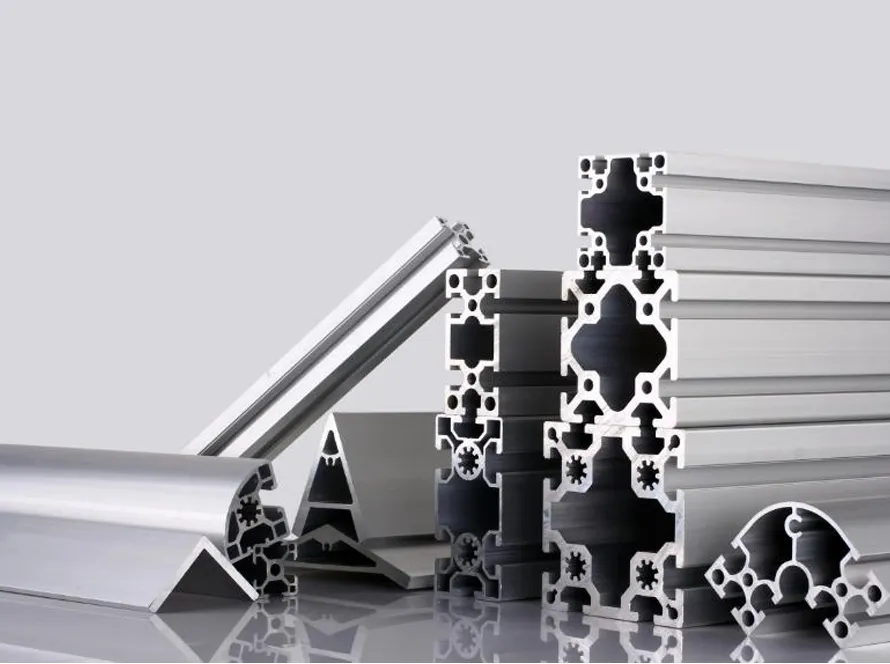
If you are looking for reliable aluminium sections, profiles, and facade-support solutions, explore our range here: